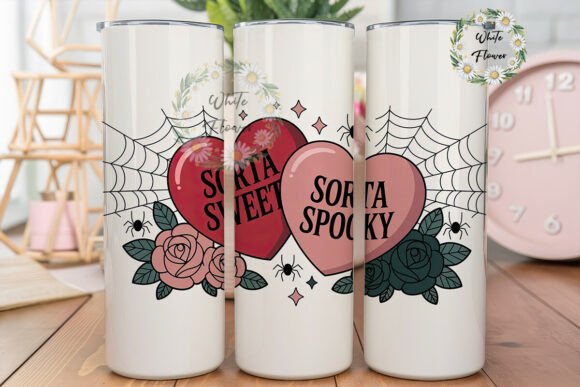
Sorta Sweet Spooky Tumbler Wrap PNG
When I first opened the Sorta Sweet Spooky Tumbler Wrap PNG, I will admit I was curious how a design built for curved tumbler surfaces would translate into the embroidery projects I tackle daily. I run a small shop where I digitize, stitch, and sell finished handmade goods, so my first instinct with any file is to ask: where does this belong, and who will want to wear or carry it? This particular graphic has a playful but not childish personality, a mood that sits right between eerie and charming. The layout is clearly meant to wrap around a cylindrical surface, but the visual structure offers plenty of room for someone like me to adapt it into custom apparel, tote bags, or even embroidered patches. It does not scream horror or Halloween cliché. Instead, it leans into a sort of gentle spookiness that feels appropriate for seasonal crafting all the way through October and even into early fall decorating. The line weights, the spacing between elements, and the overall balance of the composition tell me the designer understood how important readability is when a design moves from screen to fabric.
A Design That Respects the Maker’s Workflow
What stands out immediately about the Sorta Sweet Spooky Tumbler Wrap PNG is how the file is structured for real use. You get one straight version and one tapered version, which matters more than most casual buyers realize. When I am preparing a custom embroidered tote bag or a sweatshirt for a client who loves seasonal decor, having both options means I can test how the design sits on a flat surface versus a curved one. The resolution is set at 300 DPI, and that is the standard I rely on for clean digitizing reference. The design is not seamless, but honestly, for the kind of embroidery work I do, seamless layouts are rarely necessary unless I am stitching a continuous border. What matters more is that the elements are distinct enough to digitize without losing character. I can already see which parts would work well as satin stitch accents and which areas would benefit from a lighter fill stitch to keep the fabric from getting stiff.
For anyone running an Etsy shop or selling at craft fairs, this kind of file saves time. You do not have to redraw the concept or guess at proportions. You open the PNG, size it to the recommended dimensions of 9.3 by 8.2 inches, and start planning your thread palette. That straightforward workflow matters when you are juggling multiple orders for personalized gifts or building inventory for a holiday market. The design feels finished, not like a rough sketch that needs heavy editing. That alone raises its value as a design asset for commercial embroidery projects.
Where This Design Shines in Real Embroidery Projects
I tested the Sorta Sweet Spooky Tumbler Wrap PNG by adapting it for a medium-sized tote bag and a crewneck sweatshirt, two products that consistently sell in my shop. On the tote bag, the layout sat beautifully across the front panel. The tapered version gave me a natural curve that followed the bag’s shape without looking forced. I used a mix of fill stitch for the larger background areas and satin stitch for the finer details. The thread colors I chose were a muted orange, a soft cream, and a deep charcoal, and the contrast held up well even on the natural cotton fabric. On the sweatshirt, the straight version worked better. I centered it just below the collar, and the design felt balanced without overwhelming the garment. Customers who saw the finished piece commented that it looked store-bought but with a handmade quality that made it feel special.
I also experimented with turning part of the design into an embroidered patch. I hooped a piece of felt-backed twill, stitched out the main motif, and trimmed it close to the edge. The patch sat nicely on a denim jacket and held up through a test wash cycle. For small business owners looking to offer both direct embroidery and patch options, this design adapts well. The shapes are defined enough that they do not blur into a mess of thread, and the spacing between elements gives the stabilizer room to do its job without puckering.
Thoughts on Fabric and Stabilizer Choices
When I work with a digital embroidery file derived from a graphic like this, I always remind myself to test on scrap fabric first. The Sorta Sweet Spooky Tumbler Wrap PNG has a moderate level of detail. It is not so dense that it will bog down a home machine, but it is not minimal either. On medium-weight fabrics like quilting cotton, linen, or cotton twill, the design stitched out cleanly with a tear-away stabilizer. On stretchy fabrics like jersey or lightweight sweatshirt fleece, I switched to a cut-away stabilizer and reduced the stitch density slightly in my digitizing software. That extra step prevented the fabric from warping around the details. If you are planning to stitch this design on baby onesies or delicate knit fabrics, I would recommend using a sticky stabilizer and hooping the stabilizer instead of the garment. That approach keeps the fabric stable and the design crisp.
Where to Use This Design with Care
Not every product surface is a natural fit for the Sorta Sweet Spooky Tumbler Wrap PNG, and being honest about that saves time and materials. I would be cautious about using this design on very small hoop sizes, anything under four inches, because the finer details can lose definition when scaled down too aggressively. The original dimensions are generous at nearly ten inches wide, so shrinking it below sixty percent forces you to drop some elements or simplify the digitizing significantly. For that reason, I would not recommend it for baby bibs, small caps, or tiny patches unless you are prepared to edit the file heavily.
Curved surfaces like fitted caps present another challenge. The tapered version helps, but cap embroidery always requires careful hooping and positioning. If you try to stitch the full width of the design across a cap front, you may find the edges disappearing around the curve. I would suggest using only the central motif for caps and saving the full layout for flat or gently curved products like aprons, pillow covers, or tea towels. Dark fabrics also require attention. The design has enough open space that light thread colors pop well, but if you stitch it on black or navy without a white underlay, some of the subtler shapes can feel lost. A quick test on a dark scrap will tell you whether you need to adjust your thread selection or add a dense underlay.
Products That Benefit from This Design
From my experience testing this graphic in multiple formats, I can say it fits naturally into several product categories. Tote bags are an obvious choice, especially for fall market seasons. Sweatshirts and hoodies with a relaxed fit let the design sit without distortion. Aprons for baking or gardening also work well because the spooky but sweet tone feels appropriate for casual home wear. I have also seen similar designs sell well as embroidered kitchen towels, and this one would hold up nicely on linen or cotton towel fabric. For boutique branding, a small shop could use the motif as an embroidered logo on garment tags or as a decorative accent on cloth gift bags. The versatility comes from the fact that the design does not rely on loud colors or aggressive imagery. It invites a second look without demanding attention, which is exactly the quality that makes a design feel giftable and professional.
Practical Notes for Designers and Small Shop Owners
Before you use the Sorta Sweet Spooky Tumbler Wrap PNG in any commercial embroidery project, check your digitizing software’s ability to handle the layout. Since the file is a PNG, not a native embroidery format like DST or PES, you will need to convert the graphic into stitch data. I recommend tracing the key shapes manually rather than using an auto-digitize feature, because auto-digitizing can misinterpret the tapered edges and create unnecessary stitch paths. Take the time to assign separate thread colors to each major element. A three-color palette is usually enough for this design, but you could add a fourth accent for highlights if you want more depth.
Licensing is another area where I advise caution. The product listing states it is free of watermarks and ready for use, but always confirm whether your intended use, especially selling finished products or digital items, falls within the allowed terms. If you plan to sell the embroidered items at markets or on Etsy, keep a record of your license or purchase confirmation. That small habit protects your business and builds trust with customers who ask about design origins.
Testing Before Committing
I always tell other makers to run a black and white mockup before stitching. Print the Sorta Sweet Spooky Tumbler Wrap PNG in grayscale at the exact size you plan to embroider. That mockup reveals which areas might read as muddy or too similar in value. I did this with the straight version and noticed that two small accent shapes blended into the background when viewed from a few feet away. Adjusting the thread colors to increase contrast solved the issue before I wasted fabric or stabilizer. That kind of pre-stitch check is especially valuable for designs that were originally made for digital or print use rather than embroidery. The human eye processes thread differently than ink or screen pixels, so what looks clear on a monitor can feel flat once stitched.
Final Thoughts on the Sorta Sweet Spooky Tumbler Wrap PNG
After spending time with this design across several projects, I can recommend the Sorta Sweet Spooky Tumbler Wrap PNG as a solid choice for embroiderers who want a seasonal look without the overdone pumpkin-and-ghost routine. It suits the craft business owner who values clean lines and adaptable layouts. It fits the Etsy seller looking for a design that photographs well in product listings and holds up in real use. The straight and tapered file structure shows an understanding of how makers actually work, and the 300 DPI resolution gives digitizers enough clarity to produce professional results. If you treat it with the same care you would give any embroidery file, testing your stabilizer, thread contrast, and hoop size beforehand, you will end up with a finished product that feels custom and considered. That is the kind of design asset that builds repeat customers and strengthens a small shop’s reputation for quality handmade work. I will be keeping this one in my active project folder through the fall season, and I suspect many of you will find a place for it in yours too.