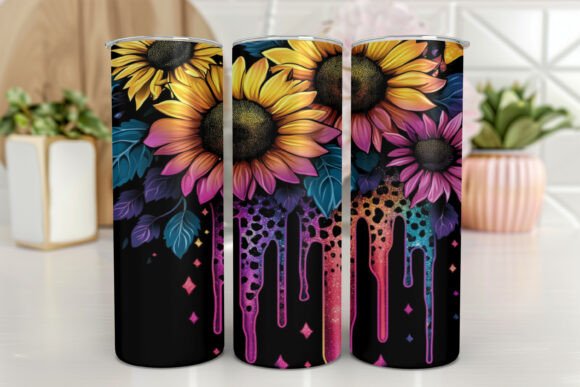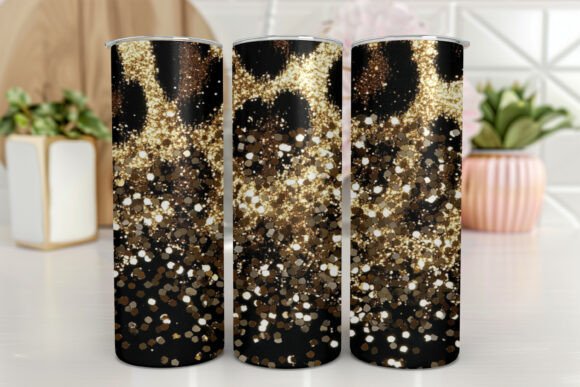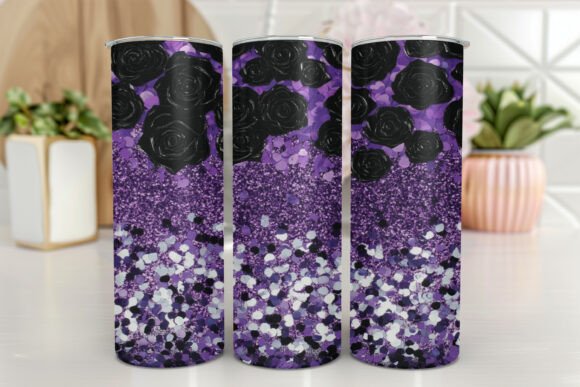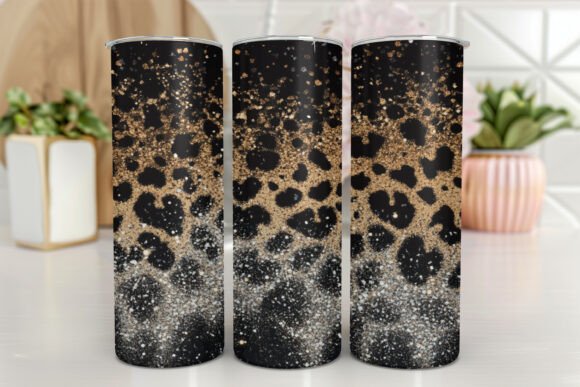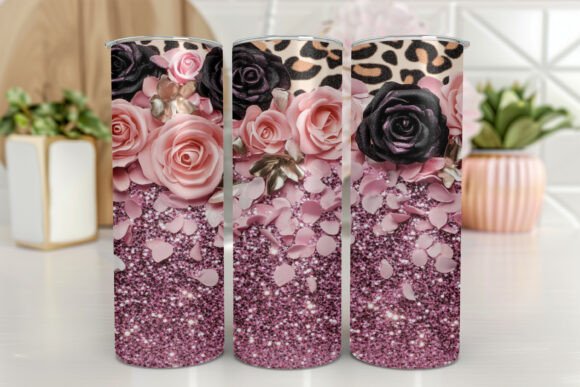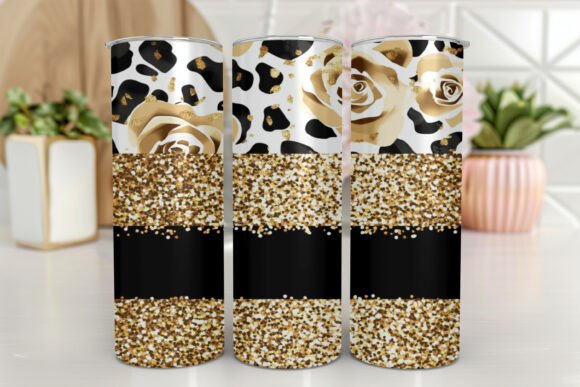
Leopard Drip Tumbler Wrap
When I first opened the Leopard Drip Tumbler Wrap file, I was immediately struck by the energy of the composition. This is not a quiet, subtle design. It has movement, contrast, and a wildness that feels both fashionable and grounded. As someone who has reviewed hundreds of digital embroidery files and graphic assets for real stitching projects, I look for designs that translate well from screen to fabric, from mockup to finished product. This one caught my attention because it blends two visual languages: the organic unpredictability of leopard spotting and the fluid, almost graffiti-like quality of the drip motif. It feels like it belongs on a product that wants to be noticed, whether that is a custom tumbler, a sweatshirt, or a tote bag for a boutique market.
The layout is clearly built for a specific format: a 20oz straight skinny tumbler, measuring 9.3 by 8.2 inches at 300 DPI. That is a generous canvas, and the design uses the space well. The leopard pattern is not cramped, and the drips extend naturally, giving the whole piece a vertical rhythm that draws the eye down. For an embroidery designer, that vertical flow is useful because it guides where you might place the design on an apron panel, the front of a hoodie, or the center of a pillow cover. The mood is bold, urban, and slightly edgy, but not aggressive. It could work for a teen customer, a young adult looking for personalized gifts, or even a small shop owner wanting to create merchandise that stands out at a craft fair.
The First Impression: Bold, Organic, and Full of Attitude
The Leopard Drip Tumbler Wrap creates an immediate sense of texture. Leopard print in itself is a classic pattern, but the addition of the drip effect makes it feel contemporary. The spots are not rigidly symmetrical, which is a strength for machine embroidery because it hides minor registration issues. The drips add a sense of motion, almost like paint running down the side of a cup. In embroidery terms, that fluidity gives you room to play with satin stitch and fill stitch combinations. The contrast between the dense spots and the open drips means you can create visual interest without overwhelming the fabric.
I see this design fitting naturally into custom apparel projects. A crewneck sweatshirt with this design centered on the chest would have immediate streetwear appeal. A tote bag for a small shop selling accessories or beauty products could carry this pattern as a signature look. Even an embroidered patch for a jacket or backpack would capture the same energy at a smaller scale. The design feels versatile, but it is definitely aimed at a customer who wants something beyond basic monograms or floral initials. It is for the buyer who sees their personal style as part of their everyday carry.
Where This Design Belongs in Your Embroidery Work
Let me place this in a real scenario. A client comes to me wanting a custom embroidered tote bag as a gift for a friend who loves bold patterns and reusable tumblers. They want something that feels personal but not cutesy. The Leopard Drip Tumbler Wrap immediately comes to mind because it has the look of a premium boutique product without being overly feminine or juvenile. I can see stitching this design onto a natural canvas tote, using deep brown, gold, and cream thread colors to match the classic leopard palette, with the drips rendered in a slightly glossy rayon thread to catch the light.
For the embroidery project, I would treat the drips as satin stitch elements with a moderate stitch density, while the leopard spots could be a combination of satin and fill stitch, depending on the size of each spot. The design file itself is a high-resolution graphic, so I would need to convert it to an embroidery file format compatible with my machine. That step is critical. The 300 DPI resolution gives me clean lines to work with during digitization, which reduces the risk of jagged edges in the final stitching. The size, 9.3 by 8.2 inches, fits comfortably within a large hoop, like a 10 by 10 or 12 by 12 inch hoop, leaving enough margin for proper stabilization.
I have used similar graphic assets to create custom apparel for small business merchandise. A boutique that sells handmade candles and bath products could use this design on apron fronts or even on branded caps. It also works well for holiday embroidery projects aimed at adults who appreciate animal prints. A leopard drip design on a pillow cover or a set of tea towels makes a memorable holiday gift that feels intentional and stylish.
How It Performs Across Different Products and Surfaces
The Leopard Drip Tumbler Wrap translates well to several product categories because the design is not overly detailed in a way that gets lost in the stitching. Machine embroidery relies on clarity of shape and reasonable stitch density. This design has clear, distinct shapes. The leopard spots are irregular enough that minor thread tension variations will not ruin the look. The drips are thick enough that satin stitch will hold its shape without puckering, provided you use the right stabilizer and hoop the fabric correctly.
For custom apparel like t-shirts and sweatshirts, I would recommend a tear-away or wash-away stabilizer, depending on the fabric weight. On a thick sweatshirt, a medium-weight cutaway stabilizer will keep the stitches stable. On a lightweight baby onesie or a delicate blouse, I would use a soft cutaway and reduce the stitch density slightly if possible. For tote bags made of canvas or denim, a heavy-duty stabilizer is necessary to prevent the fabric from distorting under the stitching.
For embroidered patches, this design is excellent. The bold shapes and limited color palette make it ideal for patch production. You can stitch it onto twill, cut around the outline, and apply a merrowed edge or a hot-cut border. Patches with animal prints and graphic drips sell well at craft fairs and on Etsy, especially when paired with witty sayings or personalization. For commercial embroidery, the design gives you a product that feels current and not dated. It avoids the overly cutesy or overly formal trap that many embroidery designs fall into.
For printable mockups and digital product previews, the high-resolution file is ready to use. You can layer it onto a tumbler image, a tote bag photo, or a sweatshirt mockup to show customers what the finished product will look like. That alone saves time for Etsy sellers and small shop owners who need to create listings quickly. The design works as both a standalone graphic and a stitching guide.
Where Caution Matters in Placement and Fabric Choice
As practical as this design is, I have to point out a few areas where you need to be careful. The size of the design, 9.3 by 8.2 inches, is not small. If you try to stitch it in a hoop that is too tight, you risk distorting the outer edges of the drips. Always use a hoop that is at least two inches larger than the design dimensions on each side. For a design this size, a 10 by 10 inch hoop is the minimum, and a 12 by 12 inch hoop gives you much better control.
Textured fabrics like fleece, sherpa, or thick terry cloth can swallow the detail of the drips. The satin stitch may not lay flat if the fabric has too much pile. I would test this design on a scrap piece of your target fabric before committing to a finished product. Stretchy fabrics like jersey knit require a cutaway stabilizer and possibly a lightweight topping to keep the stitches from sinking. Dark fabrics will need a white or light-colored underlay, or you may need to use a layer of water-soluble topping to prevent the dark fabric from showing through the stitches.
Curved surfaces like caps or rounded tumblers present another challenge. The design is made for a flat cylindrical wrap, but if you adapt it for a cap front, you may need to adjust the digitization to account for the curve. The drips should flow with the curve, not against it. I would advise testing the stitchout on a cap form before mass production. Small hoop sizes will not accommodate this design at full scale. If you need a smaller version for a baby onesie or a small patch, you will have to resize and re-digitize, which can affect stitch density and detail retention.
Tiny lettering is not present in this design, which is a relief. Many tumbler wraps include small text that becomes unreadable at embroidery scale. Here, the focus is entirely on the pattern and the drips, so you do not have to worry about illegible letters ruining the finished product. The design also avoids dense stitch areas that could cause fabric puckering. The spots are spaced naturally, and the drips are elongated, which distributes the stitch count evenly across the design.
What This Design Does for Your Finished Product and Buyer Confidence
A well-chosen embroidery design elevates a handmade product from something that looks homemade to something that looks professional. The Leopard Drip Tumbler Wrap has that potential. When stitched cleanly with good thread contrast, it signals to the buyer that the maker paid attention to detail. The pattern is recognizable but not generic. It gives the product a personality that customers remember, which is valuable for brand consistency across multiple products. If you sell at a craft fair or on Etsy, having a signature pattern like this across tote bags, sweatshirts, and pillows creates a cohesive look that builds trust.
The giftability of this design is strong. A custom embroidered item with a trendy pattern feels more thoughtful than a store-bought gift. For holiday embroidery, birthday gifts, or wedding favors, the leopard drip motif appeals to a wide age range, from teenagers to adults who appreciate fashion-forward design. It also works well for personalized products where you add a monogram or name alongside the pattern, as long as you test the combined layout first.
Buyer engagement often comes from seeing a mockup that looks professional. A clear, high-resolution printable mockup using this design file can make the difference between a listing that gets clicks and one that gets ignored. For small shop merchandise, first impressions matter. A tumbler wrap design that looks sharp in the listing photo builds confidence that the finished product will look just as good.
Practical Notes Before You Stitch
Before you commit this design to a final product, take these steps. Test it on scrap fabric first. Use the exact fabric type you plan to use for the finished item. Check thread color contrast by stitching a small section in your proposed colors. The leopard pattern works best with a dark brown or black base and gold, cream, or rust accents. The drips can be stitched in the same palette or in a contrasting color like white, metallic silver, or even neon for a bolder look.
Review the stitch density after digitization. If the file you create has overly dense areas, reduce the density slightly to prevent the fabric from puckering. Confirm your hoop size can accommodate the full design with room to spare. Inspect small details like the tips of the drips. They should taper cleanly without leaving a gap or a blunted end. Test the design in a black and white mockup first. That helps you see contrast issues before you thread the machine.
Compare how the design looks on light and dark fabric backgrounds. On a light fabric, the leopard spots will pop. On a dark fabric, you may need a lighter underlay or a thicker thread to make the pattern visible. Use the proper stabilizer for your fabric weight. A design of this size and density needs a stabilizer that will not tear or stretch during stitching. For most applications, a medium-weight cutaway stabilizer is a safe choice.
Confirm the licensing terms before you sell finished items made from this design or use it in digital products. Since the listing states this is for digital files only, make sure you understand whether commercial use is allowed. If you plan to sell embroidered products featuring this design, check that the license covers that use. If you plan to resell the digital file itself, verify that you have permission to do so. Many graphic assets are for personal or small business use only and do not allow mass production or resale of the digital file.
The Leopard Drip Tumbler Wrap offers a strong foundation for a variety of embroidery projects. It is bold without being overwhelming, stylish without being trendy, and versatile without being generic. With careful digitization, proper stabilization, and thoughtful placement, it can become a signature design in your product lineup. Whether you are stitching it onto a tote bag for a client, adding it to a sweatshirt for a holiday gift, or using it as a mockup asset for your Etsy shop, this design rewards attention to detail and creative thread choices.